Single Post
4 December 2025
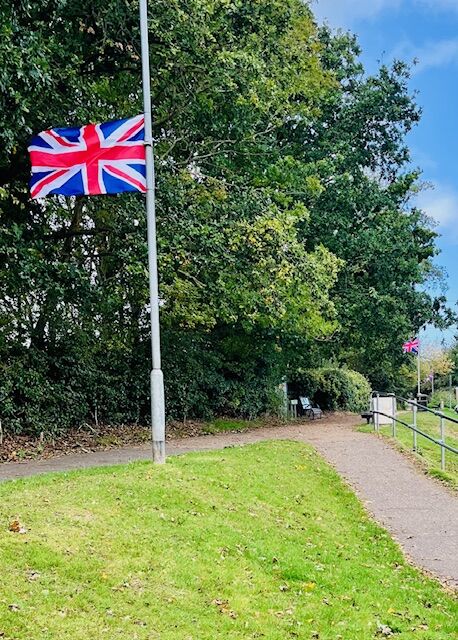
The path is the same- the same gentle bends, the same stiles that creak ever so slightly and the very same invisible birds that remind you of their presence.
He walks with me, a familiar black figure, tail carried high. He pauses to sniff the spots he always has, a reiteration that rituals still matter.
But something is different today and that is not just the presence of Daniel, my 22-year-old son, on a weekend break from his work in London.
There are Union Jacks hanging from lampposts that line the paths, flags pinned to fences, and sometimes tucked into garden gates. A quiet parade with no people, no explanation, just presence!
Of course, these flags could be merely celebratory, and I could just be brooding. After all, I still have prominently displayed at home, a set of the 6 mini-Union Jacks from the late Queen Elizabeth’s diamond jubilee. They were flags that a 9-year-old Daniel brought home from school, flags that still occupy a pride of place at home.
And yet in a village of 4000, where I may well be one of the very few ‘migrants’, I can’t help but notice the difference between how these newly appeared flags may look to others and how they feel to me.
Cody doesn’t see the flags, at least not in the way that I do. He trots along, unaware of symbolism. He is a black standard poodle- stately, conspicuous and always welcomed with a smile, a pat, and a kind word.
I wonder sometimes, if his pedigree helps. Does it make him easier to be accepted, despite his colour? Would it be different if he were a scrappy stray? Would it be different if I were?
There is an odd sort of comfort in his presence. He doesn’t seem to need to belong, he simply does. He has no need to justify, to explain, or indeed to smile in just the right way to put others at ease. He has no fear of what the flags might mean.
I, on the other hand, find myself alert in a way that I wasn’t yesterday. It is subtle. It is not quite fear or alienation, it is more of a quiet sharpening of the senses. It is a kind of awareness that comes not from danger, but from difference. It is knowing that symbols, even when apparently benign, are not neutral.
As part of work, I discuss issues of identity with my patients, write papers and edit textbooks about cultural inclusion and its narratives. Yet here, on this quiet country lane, I am reminded that those questions don’t just stay within the limited realms of our professional lives. They follow us on walks, through fields, beneath fluttering flags.